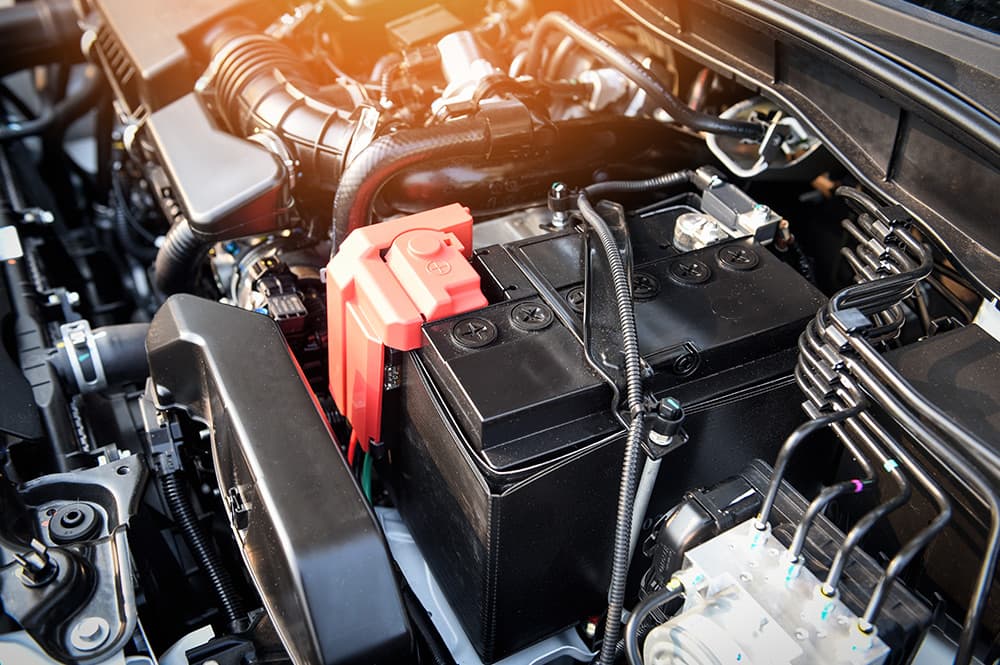
The heart of your car’s engine is the battery. This innocuous-looking box is what provides the power to start the vehicle every time you turn the ignition key (or, to be more accurate with modern vehicles, push the start button). But even a healthy battery is useless if the current can’t get out — and that’s exactly what dirty, corroded connections do.
What Corrosion Looks Like
Check the battery terminals for a white, green, or bluish powdery crust around the posts and clamps. That residue is corrosion — a byproduct of the battery’s normal chemistry, accelerated by heat and humidity. Florida’s climate makes it appear faster than in most states.
Why It Matters
- Hard starts — corrosion resists current flow, so the starter gets less power than it needs.
- Charging problems — the alternator can’t properly recharge a battery it can’t fully connect to.
- Electrical gremlins — flickering lights and erratic electronics often trace back to poor battery contact.
- Shortened battery life — a chronically undercharged battery sulfates and dies early.
Prevention Is Simple
Terminal cleaning and protective treatment take minutes. During routine service, technicians can remove corrosion, tighten the clamps, and apply a protectant that slows regrowth. Pairing this with a periodic battery test gives you a full picture of your starting system’s health.
When to Have It Checked
Twice a year is a good rhythm in Florida — heat is the battery’s worst enemy, and summer failures are common. Any visible crust, slow crank, or clicking start is a reason to have it looked at now rather than later.
Ask for a battery connection check with your next Signature Service Oil Change at Jiffy Lube of Florida. It’s a small step that prevents one of the most common — and most avoidable — roadside breakdowns.